.png)
The Full Story
Titanium Dioxide - A Necessary Reality Check
If you’ve spent time online, you’ve probably seen fear-driven posts claiming that titanium dioxide is dangerous, toxic, or “the devil ingredient.” You’ll also find brands repeating these claims while citing scientific papers that don’t apply to cosmetics, misquoting research on inhalation or high-dose oral exposure, and ignoring the fact that cosmetic-grade minerals behave completely differently.
This misinformation spreads because it sounds dramatic - not because it’s true.
The following information is not a regurgitation of Instagram captions, half-read journal articles or wellness blogs using scientific language without scientific accuracy. We are dealing with actual regulatory science, toxicology data, and what has been confirmed repeatedly by the TGA, FDA, SCCS, AICIS, Health Canada and every other major safety authority in the world.
This page exists to separate evidence from internet noise. No fear, no marketing exaggeration - just verifiable fact.

1. Why minerals are used in cosmetics
Mica, titanium dioxide and iron oxides are used in cosmetics because they give colour, luminosity and light reflection. They are non-soluble minerals, meaning they do not dissolve into skin or enter the bloodstream. They sit on the skin surface and give a natural glow without penetrating deeper layers.
These ingredients are approved for use by:
-
TGA (Therapeutic Goods Administration – Australia)
-
AICIS (Australian Industrial Chemicals Introduction Scheme)
-
SCCS (Scientific Committee on Consumer Safety – European Union)
-
FDA (Food & Drug Administration – USA)
All major regulatory bodies classify topical use of cosmetic-grade mica, titanium dioxide and iron oxides as safe when used as intended.
2. About Titanium Dioxide (Cosmetic Grade vs Food Grade)
Food Grade Titanium Dioxide (E171) - Ingestion Context
-
Used in foods, confectionery and supplements
-
Contains nano fractions and is not surface-treated
-
France banned it as a food additive only
-
Debate relates to swallowing/absorption in the gut
-
Not relevant to topical skincare
Cosmetic Titanium Dioxide - Skincare Context
-
Purified and surface-coated
-
Does not absorb or enter the bloodstream
-
Particles remain on the skin surface (SCCS, FDA, TGA)
-
Approved globally for topical use including baby sunscreen


3. Why it is coated
Titanium dioxide used in cosmetics is not raw industrial TiO₂.
It is deliberately surface-treated with other naturally occurring minerals to make it safe, stable and inert on the skin.
Common mineral coatings include:
-
Silica (SiO₂)
-
Iron Oxides
-
Alumina (Al₂O₃)
-
Titanium Dioxide (additional layers)
(Some pigments may also use stearates or dimethicone for slip.)
These coatings exist for one reason:
to prevent photocatalytic activity - meaning the mineral cannot generate free radicals under UV light.
This transforms TiO₂ into a non-reactive, skin-stable, cosmetic-grade pigment.
Important clarification:
Alumina ≠ Aluminium metal
Alumina is Aluminium Oxide (Al₂O₃) - a stable, inert mineral that does not dissolve, absorb or become bioavailable.
This distinction is recognised in toxicology and by all regulatory safety panels: SCCS (EU), AICIS (AUS), FDA (USA), Health Canada, COSMOS, and ECOCERT.
Coating does not make the pigment synthetic.
It remains a natural-origin mineral pigment, refined for safe cosmetic use.
4. Does titanium dioxide enter the bloodstream?
No.
There is no evidence that cosmetic-grade titanium dioxide penetrates living skin or enters circulation.
This conclusion was first issued in:
Scientific Committee on Consumer Safety (SCCS). Opinion on Titanium Dioxide. SCCS/1516/13. European Commission, 2013.
The findings were subsequently reviewed four years later, and the position remained unchange, meaning no new evidence was sufficient to alter the conclusion that cosmetic-grade titanium dioxide is safe for topical use when formulated to avoid inhalation exposure.
Scientific Committee on Consumer Safety (SCCS). Addendum to the Opinion on Titanium Dioxide (SCCS/1516/13). SCCS/1588/17. European Commission, 2017.
The reaffirmation is critical: regulatory opinions do not get reaffirmed if safety is questionable. They get amended.
This one did not.
Additional Regulatory References
AICIS (Australian Industrial Chemicals Introduction Scheme). Titanium Dioxide - Summary of Evaluation. Government of Australia, 2022.
Health Canada. Titanium Dioxide: Consumer Product Safety Summary. Government of Canada, 2020.
U.S. Food & Drug Administration (FDA). Sunscreen Drug Products for Over-the-Counter Human Use: Final Administrative Order. 2019.
NICNAS (Pre-AICIS). Cosmetic-Grade Titanium Dioxide - Risk Assessment Report. Government of Australia, 2016.
Scientific Committee on Consumer Safety (SCCS). Opinion on Titanium Dioxide Used in Sunscreens. SCCS/1489/12. European Commission, 2014.

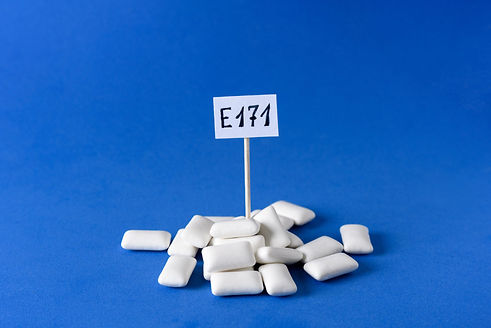
5. Why France banned TiO₂ in food - and why this is irrelevant to skincare
France banned E171 in food due to uncertainty around long-term ingestion - not because titanium dioxide was proven harmful, and not in relation to skin exposure. This decision is limited to dietary intake and has no bearing on cosmetic use.
Using this food-additive ban as evidence that cosmetic titanium dioxide is dangerous is scientifically incorrect and a misapplication of toxicology. Exposure routes are not interchangeable.
Dermal use involves no ingestion, no systemic uptake, and no relevance to the context of the French ruling. Presenting the food ban as proof of cosmetic toxicity is misleading, technically false, and incompatible with published regulatory safety assessments.
Ingestion decisions cannot be used to imply topical risk.
6. Professional formulation practice
This information applies only to formulators handling dry cosmetic powders during manufacturing.
Loose pigments such as mica, titanium dioxide and iron oxides - like any fine airborne particulate - should be handled with appropriate care in a formulation or manufacturing environment to avoid inhalation of dust. This is standard laboratory practice.
Once these pigments are dispersed and fully blended into oils (as they are in balm production), they are no longer airborne and do not present an inhalation pathway to end-users.
This is not a product safety concern. It simply reflects good formulation practice - just as chemists take care to protect their lungs from any airborne particles. Inhaling anything other than clean air is not ideal, which is why proper handling procedures exist in professional labs.
Finished cosmetic products do not carry this risk.


7. The Scientific Verdict
Across regulatory reviews, toxicological assessments, and repeated evaluations by independent authorities, there is consistent agreement:
Cosmetic-grade titanium dioxide, when applied topically and formulated to prevent inhalation, does not penetrate the skin, does not enter the bloodstream, and does not present a carcinogenic risk in this form.
The concerns frequently circulated online relate to:
-
food-grade E171 in the context of oral ingestion
-
industrial respirable powders in high-dose occupational exposure
-
uncoated or nano-dominant forms not used in cosmetic balms
None of these conditions apply to coated cosmetic pigments dispersed in oil-based formulations such as bronzing balms. In this format, titanium dioxide and iron oxides remain static, insoluble and non-bioavailable.
The evidence is not conflicting.
It is not split.
It is not evolving toward a different conclusion.
Cosmetic titanium dioxide is considered safe for topical use by all major global regulatory bodies.